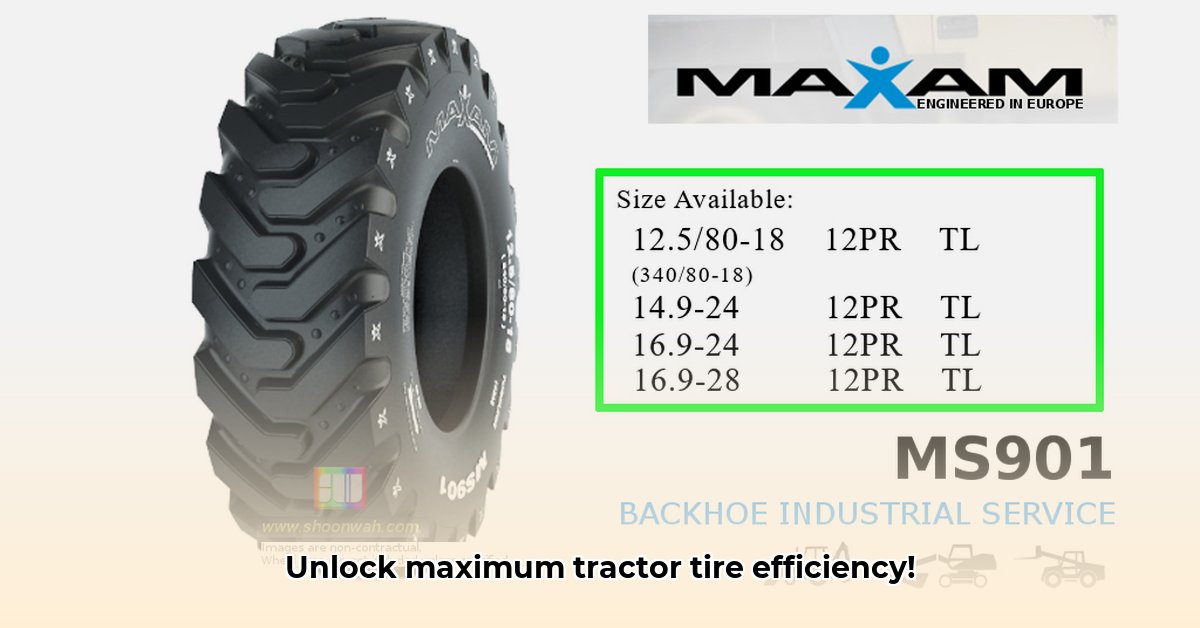
16.9 x 28 Tractor Tires: Optimizing Sustainability and Performance
Choosing the right tractor tires significantly impacts farm profitability and environmental sustainability. This guide focuses on 16.9 x 28 tires, a common size, offering practical advice for maximizing efficiency and minimizing environmental impact. We'll explore tire selection, maintenance, and future trends, empowering you to make informed decisions. For even larger tires, check out our guide on 16.9 x 38 tires.
Understanding Tire Choices: Efficiency and Environmental Impact
Your tractor tires significantly influence fuel consumption, soil compaction, and overall farm productivity. The right 16.9 x 28 tires can lead to substantial cost savings and reduced environmental footprint. Selecting the wrong tires can negate many efforts towards sustainable farming practices. Isn't it worth the time to consider optimizing tire performance?
Tire Technology: Radial vs. Bias-Ply
16.9 x 28 tractor tires are available in radial and bias-ply constructions. Radial tires generally offer superior fuel efficiency and less soil compaction due to their flexible sidewalls which create a larger contact patch with the ground, similar to the difference between specialized running shoes and work boots. This translates to reduced slippage and energy waste. However, they usually have a higher initial cost. Bias-ply tires represent a more budget-friendly option, particularly suitable for lighter applications but providing less fuel efficiency and increased soil compaction.
Lower rolling resistance, achieved through optimal tire design and proper inflation, directly translates to less fuel consumption and reduced greenhouse gas emissions. But how do you maintain optimal tire pressure? A tire pressure monitoring system (TPMS) provides real-time pressure data, preventing underinflation, which leads to fuel waste and soil compaction, or overinflation, which increases wear and reduces traction.
16.9 x 28 Tractor Tires: Sustainability Throughout the Lifecycle
Sustainable farming practices extend to the entire lifecycle of farm equipment, including tires. Consider tires made from recycled or sustainable materials, and prioritize brands with robust recycling programs. Investing in high-quality, durable tires minimizes waste through prolonged lifespan, leading to reduced environmental impact over the long term. This minimizes material extraction and manufacturing emissions, resulting in cost savings both economically and environmentally.
Selecting the Right Tires for Your Farm
Choosing the optimal 16.9 x 28 tires involves several factors. Understanding your needs is paramount to avoid costly mistakes and maintain a sustainable operation.
- Soil Type: Sandy soils might benefit from aggressive treads for grip; clay soils require tires that minimize compaction.
- Farming Operations: Heavy tillage demands tougher tires than light hauling. Consider the intensity of your farming operations when selecting the appropriate tires.
- Budget: Balance initial cost with long-term performance and environmental sustainability.
Actionable Steps: A Practical Guide to Sustainable Tire Management
Implementing these steps improves tire management and minimizes environmental impact:
- Monitor Tire Usage: Track fuel consumption and tire wear rates to identify potential areas for improvement.
- Perform Soil Analysis: Conduct a soil test to understand its properties and select tires accordingly.
- Explore Tire Options: Favor radial tires for fuel efficiency and reduced soil compaction, considering the cost-benefit analysis.
- Implement TPMS: Regular tire pressure monitoring prevents fuel waste and premature tire wear.
- Maintain Tires Regularly: Adhere to a preventative maintenance schedule to optimize tire longevity and performance.
- Promote Responsible Recycling: Utilize manufacturers’ recycling programs for proper tire disposal.
The Future of Sustainable Farm Tires
Tire technology continues to evolve. Smart sensors within tires are emerging, providing real-time data on tire pressure, temperature, and wear. Research into lighter yet durable materials and enhanced manufacturing processes is also underway. “The development of these technologies is essential for sustainable and efficient agriculture,” says Dr. Anya Sharma, Agricultural Engineer, University of California, Davis. These advancements promise even greater fuel efficiency, reduced soil compaction, and enhanced sustainability in the years to come.
Key Takeaways: Optimizing Your Farming Practices
- Tire selection directly influences fuel efficiency and soil health.
- Radial tires, despite higher initial cost, often provide better long-term value through reduced fuel consumption and extended lifespan, minimizing overall operational costs.
- Soil type, farming practices, and budget significantly impact tire selection.
- Regular tire pressure monitoring is paramount for ensuring optimal performance and minimizing environmental impact.
- Sustainable tire management considers the entire tire's lifecycle, from manufacturing to responsible disposal.
Choosing the right 16.9 x 28 tires is critical for sustainable and profitable farming. By carefully assessing your needs and following the steps outlined, you can achieve optimal performance, minimize environmental impact, and cultivate a more sustainable farming operation for years to come.